The HVAC world changed dramatically in 2025, and the effects are still rippling through 2026. If you manage properties or oversee maintenance, you’ve probably noticed contractors talking about the new refrigerants.
The EPA’s latest rules now limit which chemicals can be used in air conditioners and heat pumps, part of a broader effort to curb high-global-warming-potential (GWP) refrigerants like R-410A.
Under the American Innovation and Manufacturing Act, the U.S. must phase down high-GWP refrigerants like R-410A. While the details are still frequently changing, the plan is to cut hydrofluorocarbon use by 85% by 2036.
Refrigerants make cooling and heating possible. As they move through a system, they change from liquid to gas, absorbing and releasing heat.
Older refrigerants did their job well but caused problems for the planet. The new generation is designed to protect both the ozone layer and the climate.
For property managers, homeowners, and real estate professionals, this shift means it’s time to think ahead. Understanding these changes helps you make smart choices about equipment, maintenance, and upgrades.
Motili tracks these refrigerant changes closely to help property owners plan cost-effective upgrades.
The Old Guard: Refrigerants on Their Way Out
The United States has seen several refrigerant transitions. Each one addressed the environmental issues of its time. These refrigerants defined earlier HVAC generations but are now giving way to more sustainable options:
- R-22 (Freon) – Once the workhorse of home cooling, it was banned for new systems in 2010 and fully phased out by 2020 because of ozone damage. If your building still runs on it, the refrigerant is pricey and getting harder to find.
- R-410A – Known for its efficiency and zero ozone impact but with a GWP of about 2,088, which means it traps over 2,000 times more heat than carbon dioxide. That’s why it began being phased out of new systems in 2025.
- Other blends like R-407C and R-134a – These were used in some ductless, rooftop, and chiller systems. Both have high GWPs and are now being replaced by low-GWP hydrofluoroolefins or natural refrigerants.
While you won’t have to replace your R-410A system, the cost of the refrigerant may rise over time as supply decreases.
These new rules are part of a long effort to make cooling safer for the planet. The Montreal Protocol and Kigali Amendment set the stage for these limits decades ago.
The New Generation: Low-GWP Refrigerants
Phasing out more harmful chemicals isn’t stopping the HVAC market. Manufacturers were ready with new A2L refrigerants that meet EPA requirements without sacrificing performance. In the United States, the two you’ll hear about most are R-32 and R-454B.
R-32: Efficient and Proven
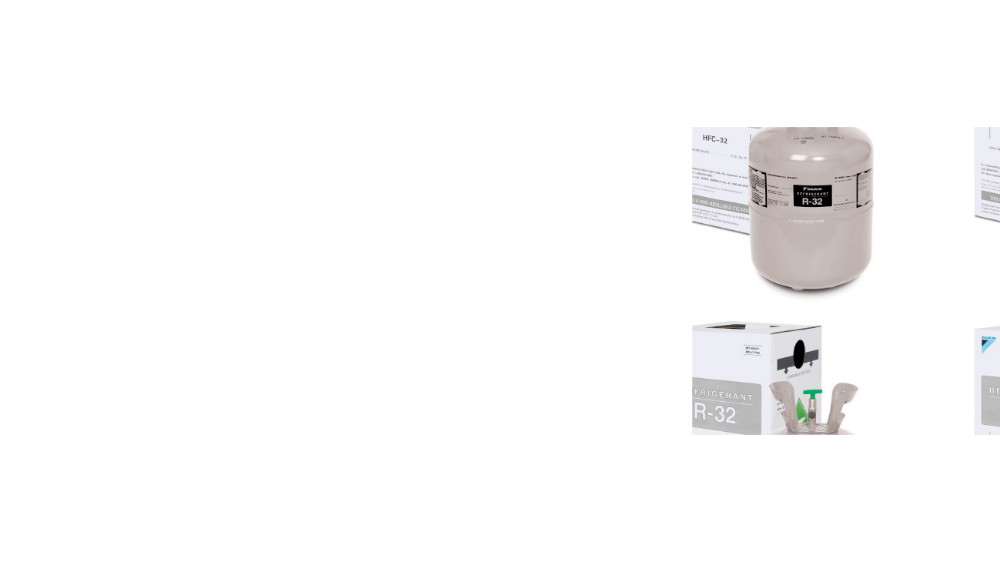
Contractors like R-32 because it behaves much like R-410A, but with only about one-third of the climate impact. Especially popular overseas, this refrigerant has a GWP of about 675, and zero ozone depletion potential.
Systems that run on R-32 often require less refrigerant to deliver the same level of comfort. That makes for higher energy efficiency and lower long-term operating costs.
Since R-32 is a single-component refrigerant, its recycling and reclamation processes are more straightforward than other blends. It’s therefore easier to responsibly manage throughout its life cycle.
R-32 performance is also reliable. It boasts strong heat transfer properties, and technicians are used to working with its familiar system pressures.
Mildly flammable, R-32 is classified as an A2L refrigerant. That means HVAC teams have to follow updated safety standards. These include improved training and proper leak detection. Luckily, modern equipment has built-in safeguards that reduce the risks and keep buildings and workers safe.
Millions of R-32 systems are in service around the world. That knowledge should give property owners confidence that the technology is proven and dependable.
Because R-32 strikes a practical balance between efficiency, safety, cost, and sustainability, manufacturers continue to release new products that run on this refrigerant. It’s a strong option for property upgrades, supporting lower emissions without sacrificing comfort.
R-454B: A Common Choice
If you’re installing new equipment in 2026, chances are it’s using R-454B. This blend of R-32 and R-1234yf cuts emissions dramatically with its GWP hovering at about 466.
This refrigerant has the same A2L safety rating as R-410A, and it runs at similar pressures. That makes it easier for contractors and manufacturers to adopt.
Other Low-GWP Options
While R-32 and R-454B will dominate, other options are emerging:
- R-1234yf and R-1234ze: Common in cars and large buildings.
- R-290 (propane): Very low GWP but more flammable; used in small, sealed systems.
- CO2 (R-744): Environmentally friendly but operates at extremely high pressure.
Every refrigerant has tradeoffs, but all are steps toward greener, more efficient HVAC systems.
Regulation and Safety for Contractors and Consumers
The shift to A2L refrigerants brings new safety requirements, and that’s where some property owners pause. After all, “mildly flammable” doesn’t sound ideal.
But the new standards are designed for exactly that – ensuring safety through smart technology. Most new systems include:.
- Leak sensors that can shut off units or activate ventilation.
- Limits on how much refrigerant can be used in one system.
- Mandatory training and certification for technicians.
- Updated codes for buildings with multiple units.
If you’re planning HVAC upgrades, it helps to know what these new safety standards mean for you and your contractor.
The precautions make A2L refrigerants safe to use in homes, apartments, and commercial buildings. According to the Air-Conditioning, Heating, and Refrigeration Institute, A2Ls have a far lower flammability risk than gases like propane or butane.
Costs, Performance, and Future Outlook for HVAC Refrigerants
New R-32 and R-454B systems cost a bit more upfront – no surprise there.
They’re built with extra sensors and new hardware. But energy efficiency usually makes up the difference.
Still, if you’re managing multiple properties, those price changes are worth factoring into next year’s budgets.
Equipment Cost and Installation
New R-32 and R-454B systems may cost slightly more upfront. They include newer technology and added safety measures. But most offer better energy efficiency, which can help offset that initial investment.
Maintenance and Servicing
Your R-410A system will still be serviceable for many years. Technicians will have access to refrigerants, though prices may rise as production drops. Staying on top of maintenance – checking for leaks, keeping coils clean, and scheduling tune-ups – will protect your system and your wallet.
Environmental and Operational Benefits
The environmental benefits are real. The EPA estimates that reducing HFC use could avoid up to 0.5°C of global warming by 2100. Lower-GWP refrigerants also transfer heat more efficiently, meaning systems can deliver the same comfort with less energy.
Future of Refrigerants
This transition won’t be the last. The AIM Act set tighter HFC limits over time, and manufacturers are already developing ultra-low-GWP refrigerants for future systems.
Candidates like R-466A and advanced HFO blends are being tested for better performance and safety. By the 2030s, some large-scale HVAC systems may even use natural refrigerants like CO2 or ammonia.
For now, R-32 and R-454B offer the best balance between sustainability and practicality.
Building a Sustainable HVAC Future
The refrigerant shift isn’t just a technical update. It’s a push toward a cleaner future.
For property pros, it’s a real opportunity to modernize and cut emissions without sacrificing comfort. And for homeowners, it’s a reminder that sustainability doesn’t have to mean compromise.
The industry’s evolving fast, and Motili is helping property managers keep pace, one system at a time.
Indeed, Motili partners with property managers and contractors nationwide to simplify HVAC upgrades, replacements, and maintenance.
As new refrigerants take hold, staying informed helps you plan smartly, stay compliant, and keep every property comfortable for years to come.